
Dental Implant — Give Yourself Back a Confident Smile
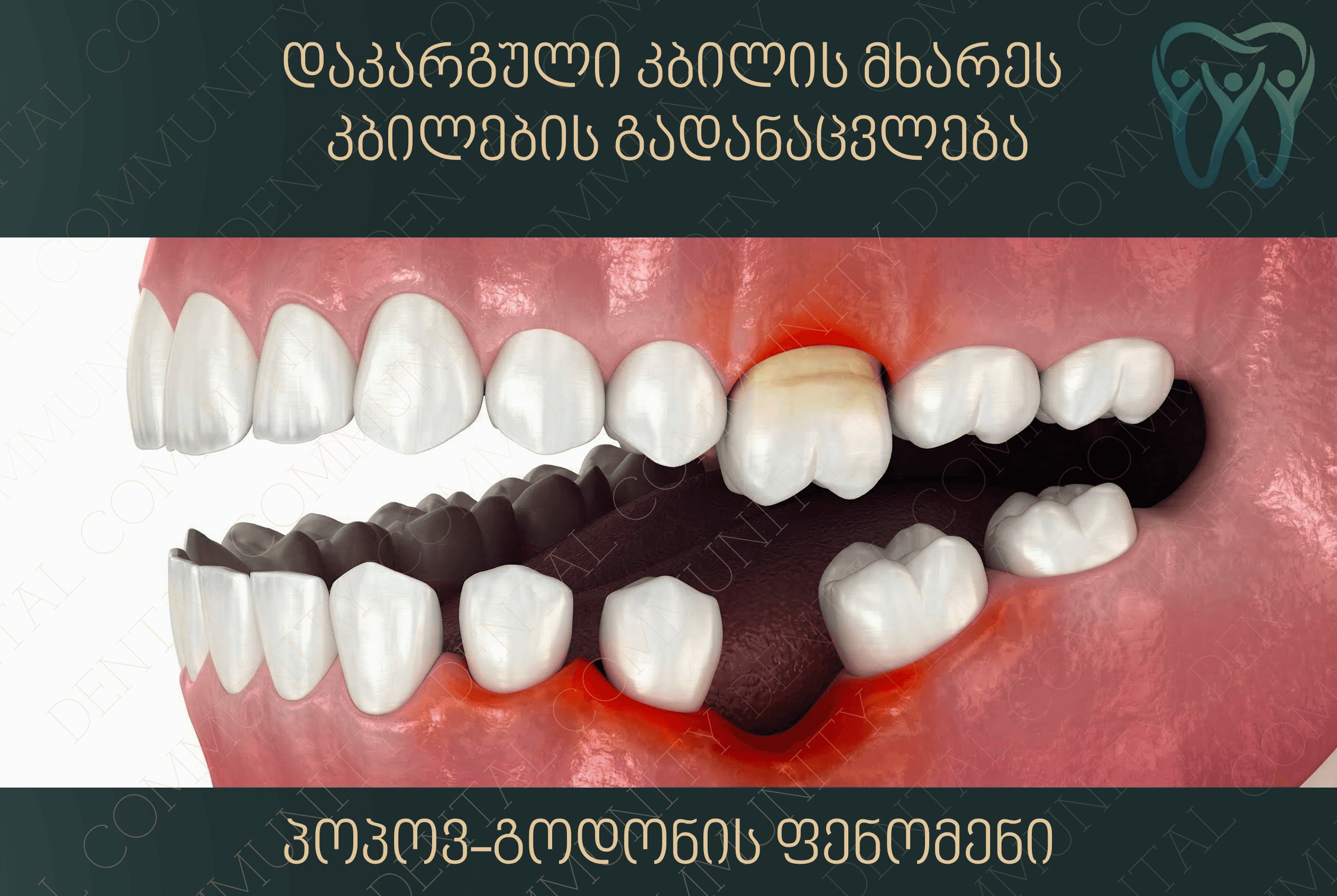
Tooth loss is not just an aesthetic discomfort. Over time, it causes neighboring teeth to shift towards the gap, disrupts chewing function, and most importantly — leads to jawbone atrophy (bone loss).
That is why dental implantation is considered the most modern and effective alternative solution to the aforementioned problems.
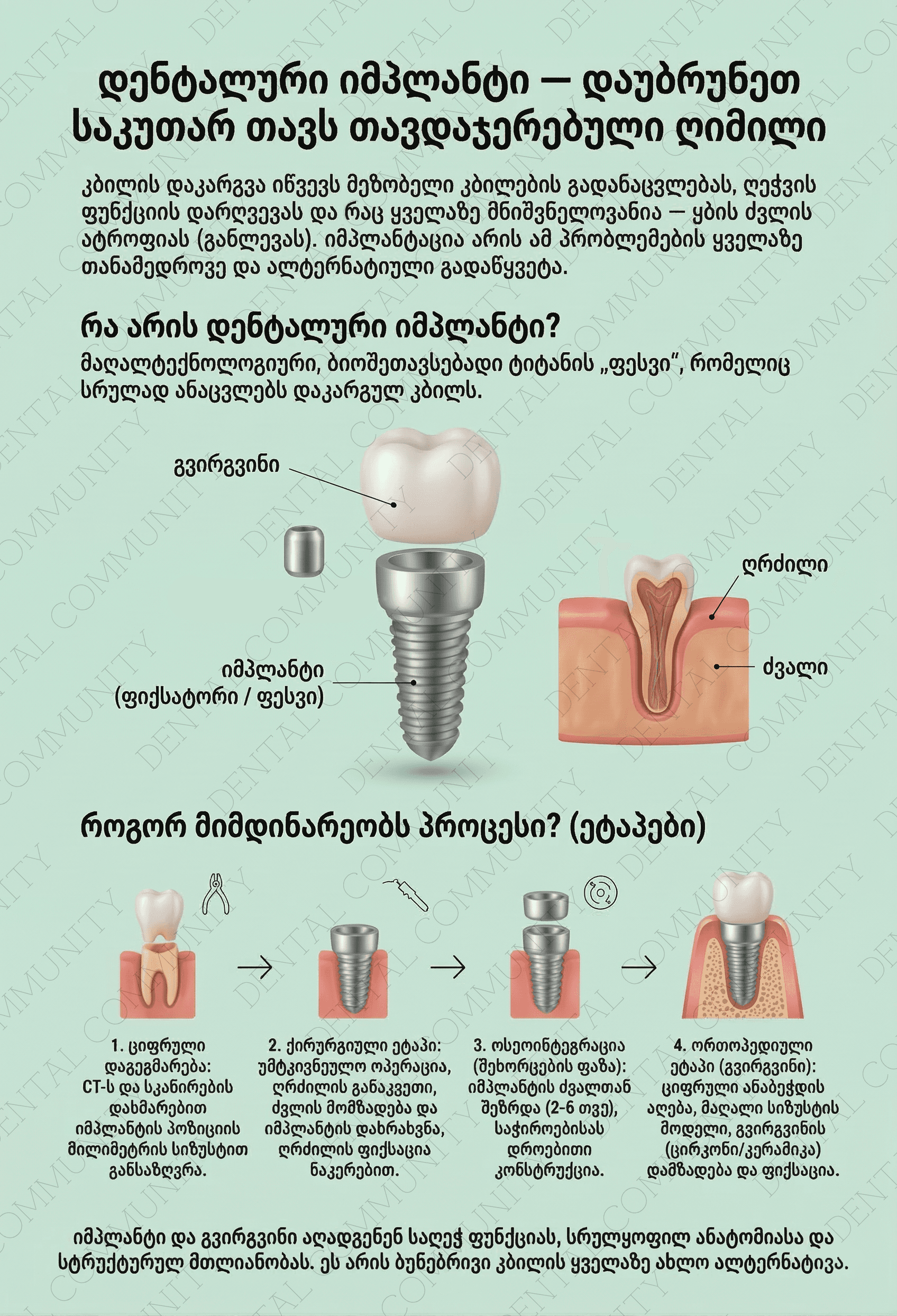
What is a dental implant?
A dental implant is a high-tech, biocompatible titanium "root" that is placed in the alveolar process of the jawbone and completely replaces the missing tooth.
Result: Visually and functionally, it is as close as possible to a natural tooth — often the difference is practically unnoticeable to the patient.
How does the process work? (Stages)
Digital Planning
- With the help of 3D imaging (CT) and digital scanning.
- The implant's position is determined with millimeter precision.
This stage is critical for a long-lasting, stable result.
Surgical Stage
- The surgery begins with local or regional anesthesia so that the process is completely painless for the patient.
- The surgeon makes a gingival incision, which allows the surface of the jawbone to be exposed.
- Using special instruments, the bone is drilled to form an intraosseous cavity that exactly matches the dimensions of the implant.
- The implant is screwed into the prepared cavity, ensuring its primary fixation.
- The surgical area is closed, and the doctor secures the gum edges using sutures.
Osseointegration (Healing Phase)
After the implant firmly fuses with the bone (osseointegration), the aesthetic part begins:
- Secondary gum incision: A small incision is made to expose the head of the implant.
- Placement of the healing abutment: A special cylindrical component — a healing abutment (gingiva former) — is attached to the implant.
- Result: After healing, the gum takes on a natural shape that perfectly fits the neck of the future tooth crown.
- It lasts on average 2–6 months (highly individual).
If necessary, a temporary structure is used to maintain aesthetics.
Orthopedic Stage (Crown)
- A digital impression is taken (using an intraoral scanner or traditional impression materials).
- A high-precision model is created, based on which the dental technician models the crown (zirconia or ceramic). The crown is then handed over to the orthopedic doctor, and it can be fixed onto the implant.
- To make it easier to adapt to the delivered structure, the doctor gives the patient appropriate instructions. In a few days or weeks, oral rehabilitation is finally complete. However, remember that bone remodeling takes much more time.
Rehabilitation and Care
- Following the doctor's recommendations in the first few days is essential.
- Proper oral hygiene (toothbrush, dental floss, oral irrigator).
- Periodic check-ups with the dentist.
- With proper care, the implant will function for many years.
Why should you choose an implant?
- It does not require the preparation (grinding down) of neighboring healthy teeth.
- It prevents bone loss (atrophy).
- It provides natural aesthetics and comfort.
- It represents a long-term and stable solution.
Remember: The implant and crown were not created just to correct aesthetic discomfort — they restore chewing function, perfect anatomy, and structural integrity.
What should you know?
Implantation is an individual procedure, and success largely depends on proper diagnostics and planning.
In some cases, restoring bone volume (augmentation) may be necessary to ensure a solid and long-lasting result.
Today, a dental implant is the closest alternative to a natural tooth — both in function and aesthetics.