
Dental Bridge — What You Need to Know Before Making a Decision?
One of the most common methods of restoring a missing tooth is a dental bridge. However, behind what seems like a simple structure lies complex biomechanics and modern technology.
Even a single missing tooth causes:
- Shifting of neighboring teeth towards the gap
- Disruption of the bite (occlusion)
- Jaw joint problems
In modern dentistry, a bridge prosthesis is a complex biomechanical structure planned in digital laboratories.
What is an Orthopedic Bridge?
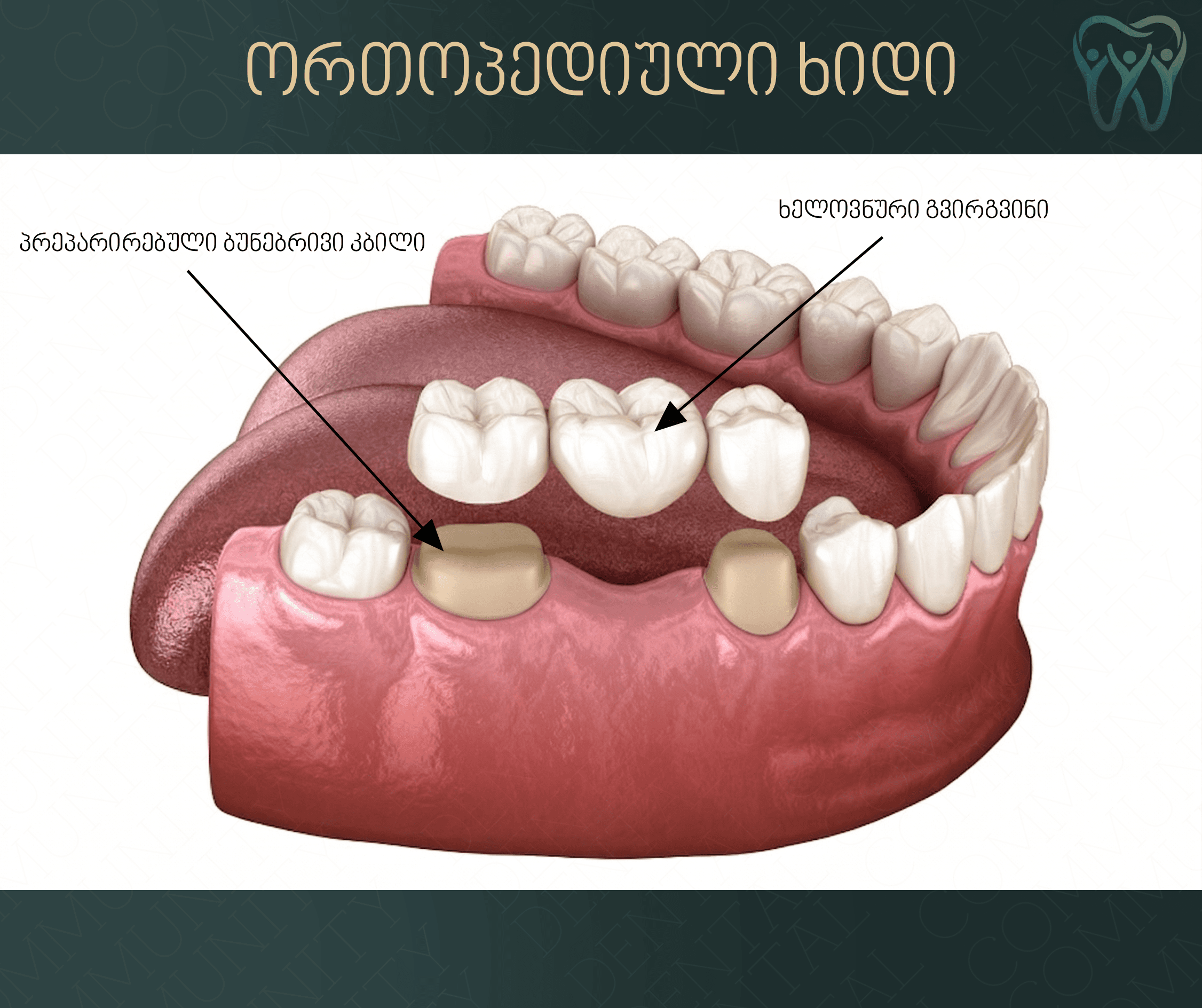
It is a fixed structure that consists of:
- Abutments (supporting crowns)
- Pontic (artificial tooth)
It acts like a "bridge," filling the empty space and relying on neighboring teeth for support.
How does a bridge structure work?
A bridge consists of two main parts:
- Abutments: Placed on the teeth adjacent to the gap.
- Pontic: An artificial tooth that fills the empty space.
Why is digital planning (CAD/CAM) crucial?
With bridges made using traditional methods (plaster impressions), there is always a risk of human error. Digital scanning allows us to achieve:
- Micron precision: The bridge perfectly adheres to the abutment tooth, eliminating the penetration of saliva and bacteria under the structure.
- Perfect occlusion: The computer calculates the chewing load to prevent damage to the jaw joint.
- Aesthetic prediction: The patient can see a 3D model in advance.
Choice of Materials:
Today, several main materials are used in dentistry, and the choice depends on the tooth's location:
- Metal-ceramic (PFM): A durable and budget-friendly option. Mainly used in the posterior (chewing) zone where the load is high.
- Zirconium oxide: The modern standard. It is highly durable and has light transmission similar to natural teeth (no "blue line" at the gum). Ideal for both anterior and posterior teeth.
- Press-ceramic (E-max): Unmatched aesthetics. Primarily used on front teeth, where natural visuals are crucial.
The most universal and frequently recommended by doctors today is the zirconia bridge — it combines strength, aesthetics, and biocompatibility.
Important Note on Implants and Bridges
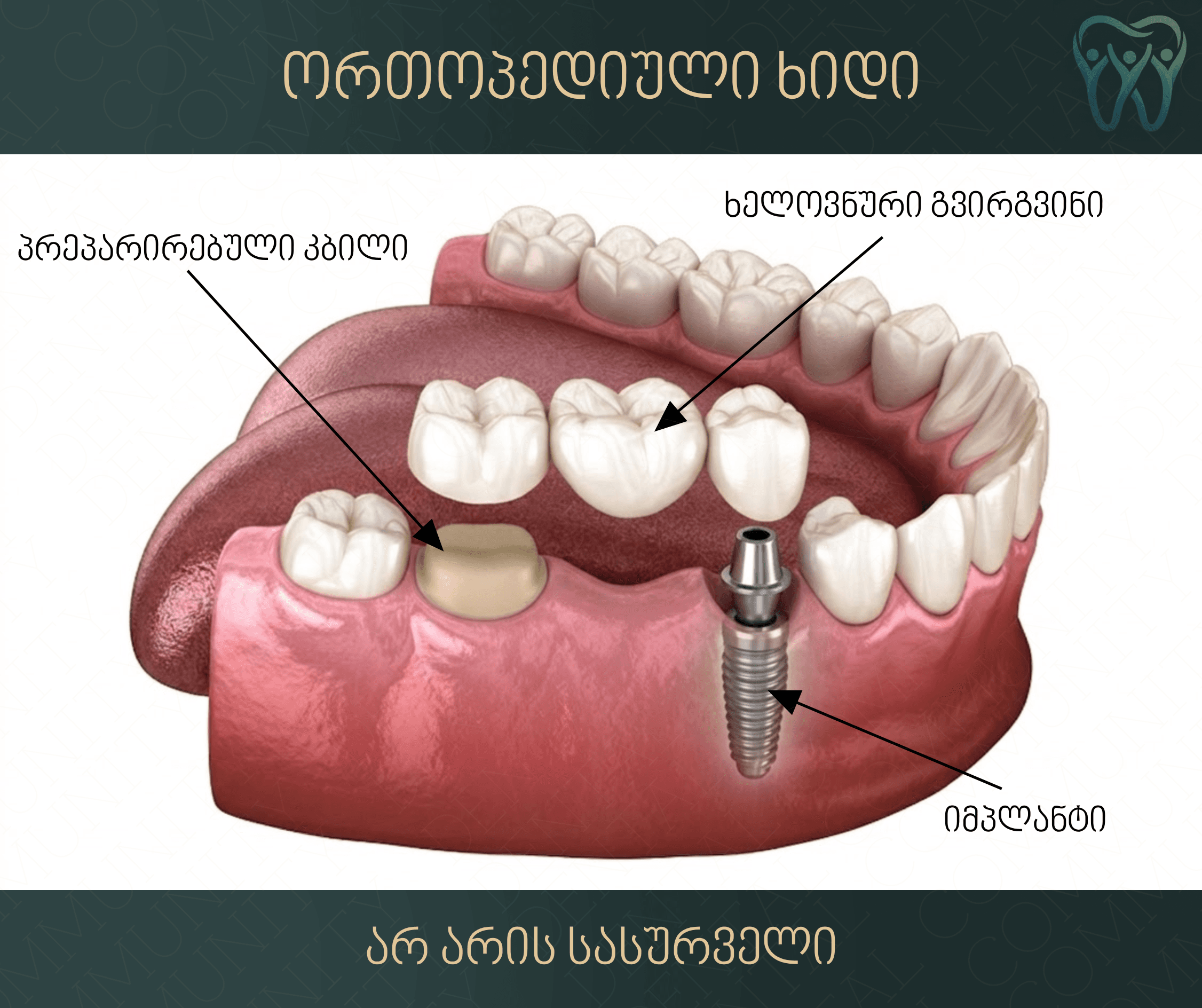
Patients must know that the idea: "I will get one implant and then place bridges on the rest of the teeth" is incorrect, as from a medical point of view, this approach is unjustifiable for several reasons.
The most important reason is the "phenomenon of micro-movements" of teeth. This phenomenon is found in all people at any age. In a physiological state, human teeth undergo micro-movements under pressure, meaning they are not entirely immovable. We know that an implant is a metal screw mechanically screwed into the bone, remaining completely immobile. Therefore, if a bridge is placed on a natural tooth on one side and an implant on the other, the result will be fatal. The micro-movements of the natural tooth will cause the implant to loosen and eventually fail.
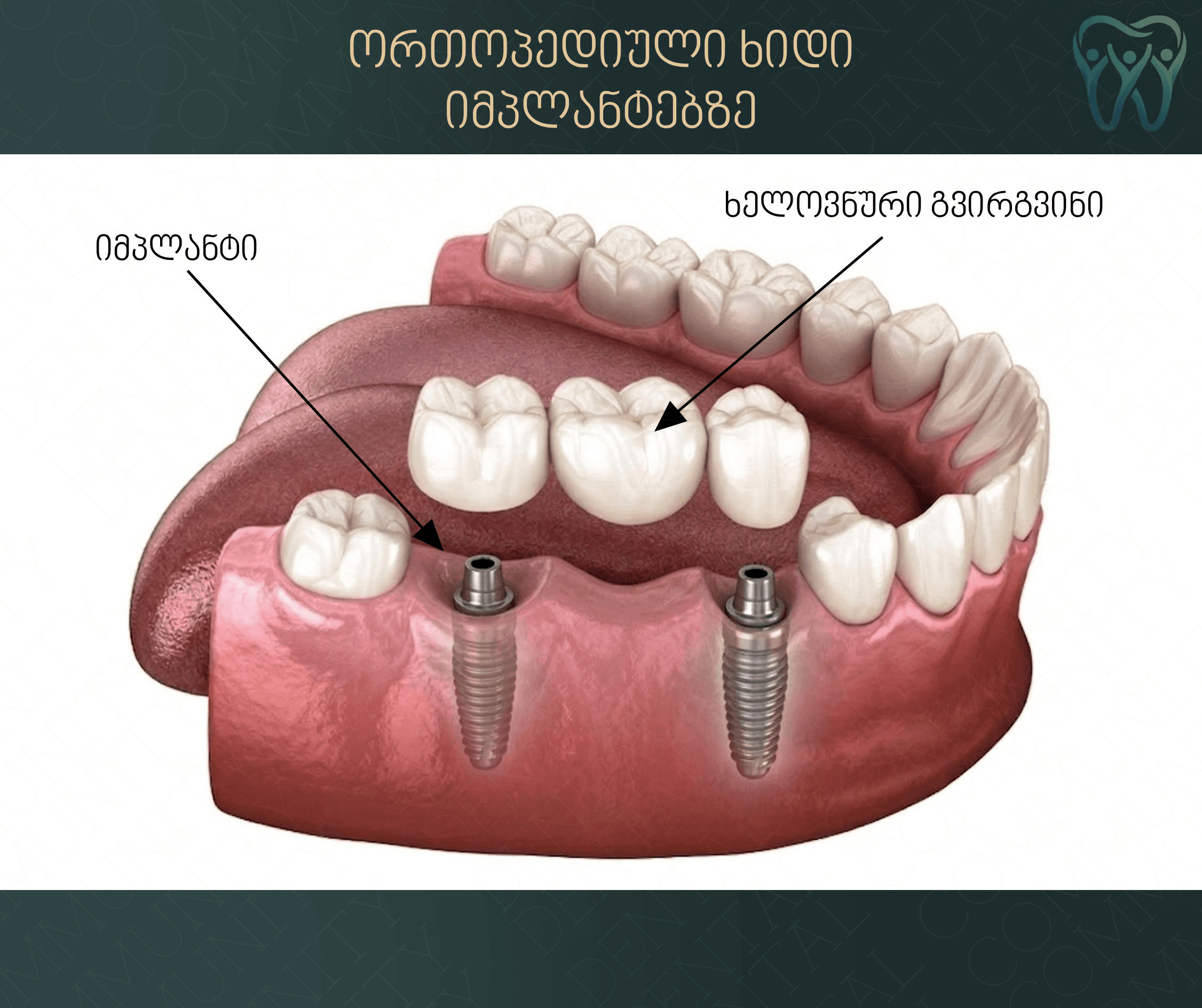
Therefore: A bridge is made either solely on natural teeth or solely on implants.
Stages of Treatment:
- Diagnostics: X-ray examination to assess the condition of the abutment teeth.
- Preparation: Grinding down the abutment teeth (under local anesthesia).
- Impression taking: Digital scanning (with a 3D scanner) or traditional impression materials.
- Temporary bridge: For the patient's comfort until the permanent structure is fabricated.
- Fitting and fixation: Fitting the finished bridge and firmly cementing it in place.
Main Advantages:
- Aesthetics: Fully restores the visual appeal of the smile.
- Functionality: Improves chewing and speech.
- Speed: The procedure is completed faster compared to other methods (e.g., implantation).
Patient Safety: Risks you should be aware of
As an independent information platform, we are obliged to note:
- Risk of pulpitis: When preparing (grinding) the abutment teeth, there is a risk of overheating the nerve. Some doctors believe endodontic treatment should be done before placing a bridge to prevent future complications... but this does not rule out keeping the tooth alive; in such cases, the doctor must work very conservatively.
- Protecting biological width: If the margin of the bridge goes too deep under the gum, it can cause chronic inflammation and bone loss.
Important Warning: The "Dead Zone" of Hygiene
Maintaining hygiene under the bridge is critically important. The space between the pontic (middle part) and the gum is an area where food easily accumulates.
If hygiene is not ideal:
- Gum inflammation (gingivitis) develops.
- The abutment teeth under the bridge get damaged.
Recommendation: Use an oral irrigator and super-floss (special thread for bridges).
Advice from "Dentistry in Georgia":
Before deciding to get a bridge, always request an X-ray (OPG) to check the condition of the roots of the abutment teeth. It is also important to rule out periodontitis and thoroughly evaluate the abutment teeth before proceeding.
Bridge or Implant?
This is the most frequent question patients ask.
| Feature | Dental Bridge | Dental Implant |
|---|---|---|
| Neighboring Teeth | Require grinding | Remain untouched |
| Time | 1-2 weeks | 3-6 months (for integration) |
| Price | Relatively lower | Relatively higher |
| Jawbone | Atrophies over time | Maintains bone volume |
Conclusion: A bridge is an excellent solution when implantation is impossible for some reason (contraindications, budget), or when neighboring teeth need restoration anyway.
Alternative: If you want to preserve neighboring teeth without grinding them down, modern dentistry often recommends dental implantation.
Why shouldn't prepared teeth be left without a "Temporary Bridge"?
A temporary bridge is a necessary stage of treatment. If a clinic offers to let you go home with prepared teeth while waiting for the permanent bridge — it means the treatment protocol is being violated. Leaving prepared teeth without a temporary structure is not only a discomfort but a serious clinical error.
Specific reasons why a Temporary Bridge is necessary:
- Protecting the tooth nerve (pulp): During preparation, the doctor removes the protective enamel layer, exposing the dentin. Dentin consists of millions of microscopic canals that connect directly to the nerve.
Risk: Bacteria in the mouth, cold, hot, or acidic foods directly affect the nerve. This can cause severe pain or nerve inflammation (pulpitis), ultimately requiring root canal treatment. - Preventing tooth shifting: Our teeth are in constant dynamics — they seek contact with neighboring and opposing teeth.
Risk: In just a few days, a prepared tooth can slightly tilt or erupt (drift). As a result, the permanent bridge made in the lab, crafted with perfect precision based on the impression, simply will not fit in the mouth anymore. - Maintaining gum contour: After tooth preparation, the gum starts to deform and may "creep over" the edges of the prepared tooth.
Risk: A temporary bridge holds the gum in the correct position. Without it, when fitting the permanent bridge, the doctor will have to traumatize the gum, or the edge of the bridge will not sit accurately, leading to future gum inflammation. - Functional and aesthetic aspects:
- Chewing: Chewing with prepared teeth is almost impossible due to pain and sensitivity.
- Speech: Especially with front teeth, the lack of a bridge disrupts diction.
- Visuals: The social factor for the patient — walking around with ground-down teeth causes psychological discomfort.